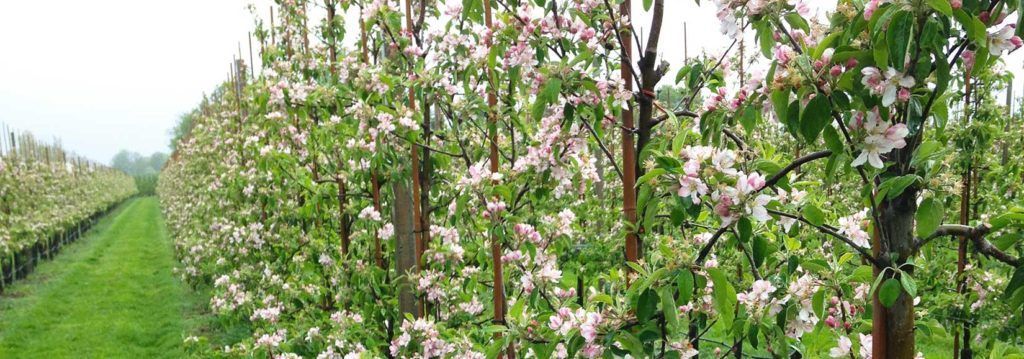
Apple and pear trees are grown as a perennial crop. From the second year onward, harvesting can begin, although production increases as the trees mature. After three years, yields become more substantial and stable, and winter pruning becomes important. This helps shape the tree and manage production levels.
It is important that the orchard is well maintained, for example by securing branches with tying tubes, protecting the crop using beneficial insects or spraying when diseases are out of control, and irrigating the orchards to support tree growth. Parts of trees that are infected with diseases (for example cancer) are removed. In cases of nutrient deficiencies—identified through leaf samples—fertilizers are applied.
When there are excessive numbers of apples or pears on a tree, thinning is carried out to ensure that the remaining fruit develops properly and that the tree has sufficient energy, which also improves fruit quality. This process starts in June.
Approximately 100–120 apples or pears can be produced per tree.
To ensure optimal light exposure for the fruit, summer pruning may be required. Removing branches improves light penetration into the tree, resulting in better coloration of the apples.
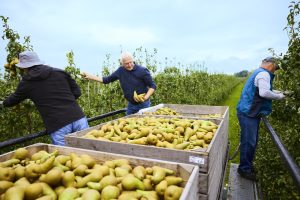
Harvesting begins in August, when the fruit can be picked depending on variety and weather, continuing through October. These are the busiest months for apple and pear growers.
After harvesting, the fruit is stored in cold storages with low oxygen levels to improve preservation. When fruit is sold, a ULO storage is opened and the apples or pears are graded by size and quality. The fruit is then packed in the desired packaging material and finally transported to customers.